
#219: Kalshi's Brazilian co-founder becomes overnight sensation
Plus: Argentina approves extradition of Braiscompany founders to Brazil; Visa looks to launch stablecoin products in Brazil next year

Olá pessoal!
Welcome back to Brazil Crypto Report for the week of December 1-5, 2025.
I hope everyone is finishing off the year on a strong note. The alt-season that we were all hoping for seems to have eluded us this time around, but there’s tons of movement in Brazil so that means we’ll be here trying to chronicle it to the best that we can
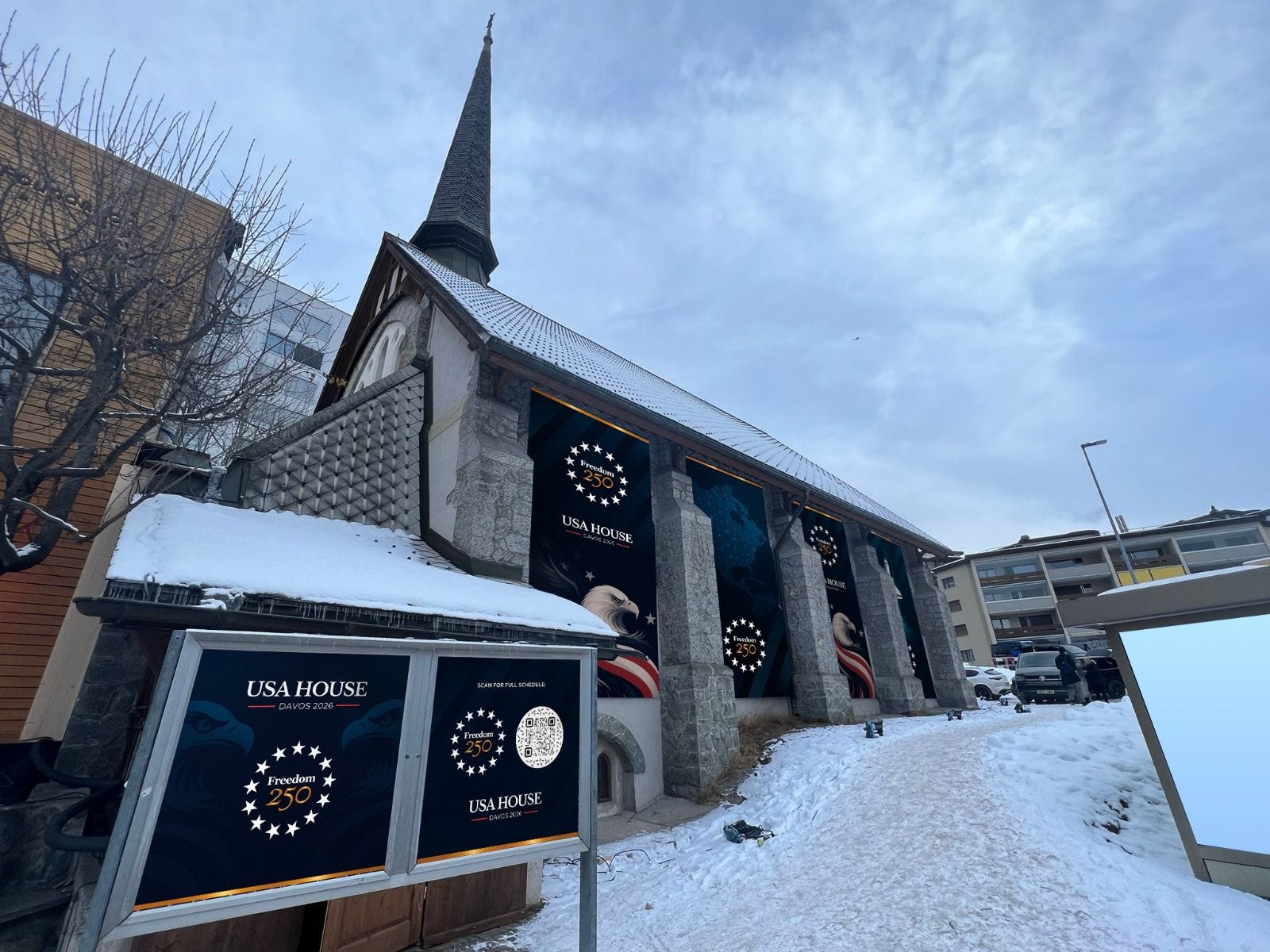
I wanted to take a second to highlight another project that I’m working on called USA House that will launch at World Economic Forum in Davos in January.
We’re partnering with the White House and the State Department to put together four days of content and VIP gatherings focused on digital assets, AI, longevity, space and defense tech in Davos’ premier side event venue.
We’ve just signed on Microsoft as the lead sponsor for the activation and have some other big names in the works.
If you’re going to be there in January be sure to shoot me a note!
🗞️ Top stories in this week’s edition:
Argentina approves Braiscompany founders’ extradition to Brazil
Brazil is a priority market for EtherFi Cash
Brazil eliminates import tax on mining hardware
Visa looks to launch stablecoin products in Brazil next year
Brazilian and Kalshi co-founder Luana Lopes Lara rises to stardom
Thanks for reading and have a great week!
- AWS
👊 Jump into the BCR English language Telegram group if you’d like to continue the conversation
🙌 🇧🇷Brazil Crypto Report is a free publication; if you wish to support my work you can do so by hitting the button below👇
Brazil Crypto Report is presented by

Avenia is the programmable financial infrastructure for Latin America. Connect to local payment rails like PIX, SPEI and CBU — using stablecoins as settlement — and unlock real-time, cross-border payments without banks, FX desks, or SWIFT.
Whether you’re building a wallet, a crypto card, or a global treasury solution, Avenia gives you the APIs and compliance-ready infrastructure to scale in LatAm. Move money between BRL, USD, MXN and more — fast, transparent, and fully on-chain.

Figment is the leading independent provider of staking infrastructure with $18B assets under stake and provides the complete solution for over 1000 institutional clients in Latin America and globally. Through its enterprise-grade infrastructure, Figment enables clients such as banks and exchanges, to earn rewards on Proof-of-Stake assets such as Ethereum and Solana, while maintaining the highest standards of security, compliance, and performance.
Figment supports the growth of the global blockchain ecosystem by making staking simple, transparent, and scalable. Figment is at the forefront of this transformation, providing the trusted infrastructure, insights, and expertise needed to enable clients to stake confidently.
New Podcasts!
This week I spoke with Justin Norman, who is a content creator and filmmaker who explores how technology is impacting emerging markets. He recently spent several weeks in Latin America filming a YouTube docuseries about stablecoin adoption in Argentina and Bolivia.
Justin is an incredible storyteller, and I appreciate how he approaches the topic not as a crypto “homerist” but rather with a genuine interest to uncover what’s actually happening.
He has some unique and heterodox insights into what’s actually driving stablecoin adoption in this part of the world that aren’t always aligned with the typical crypto echo chamber talking points.
🙌 Also check out BCR on your preferred podcast platform YouTube | Spotify | Apple Podcasts
Argentina approves Braiscompany founders’ extradition to Brazil
The Argentinian Justice system approved the extradition to Brazil of Antonio Neto and Fabricia Farias, the creators of the Braiscompany crypto pyramid scheme.
The scheme required individuals to purchase bitcoin and send it to a company wallet. It eventually collapsed when payments to clients suddenly ceased in late 2022. Brazilian authorities estimate the financial damage at R$1.1 billion, impacting approximately 20,000 victims.
A Paraiba court condemned Antonio Neto to 88 years in prison and Fabricia Farias to 62 years. They were able to flee to Argentina before police raided the Braiscompany compound, but were arrested by local authorities in March 2024 and have been living under house arrest ever since.
The couple’s lawyers say that they will appeal the decision.
Visa looks to launch stablecoin products in Brazil next year
Visa is actively working to launch new stablecoin products in Brazil and the broader Latin American market by 2026 in light of growing interest from regional banks and favorable regulatory developments.
Antonia Sousa, the company’s director for blockchain and digital assets in Latin America, said she has spoken with nearly all of the major banks in the region and that “they all show concrete interest.”
The company’s strategy involves leveraging stablecoins for faster cross-border payments and expanding the use of its VTAP tokenization platform. Sousa said:
“the expansion of VTAP will depend on the market’s maturity and certainty about what a stablecoin is.”
She added that new stablecoin products and programmable finance products should emerge, using smart contracts to automate payment flows, validations, and business rules.
Brazil becomes priority market for EtherFi Cash
Brazil has become a priority market and a global leader for EtherFi Cash, a crypto neobank launched by decentralized finance the protocol EtherFi.
According to EtherFi founder Mike Silagadze, the product’s success is due to a unique “product-market fit” resulting from three factors: the local population’s “anti-government” culture, the need for asset dollarization, and a viral adoption effect.
In an interview with Modular Crypto, he explained:
“There is a spirit here of anti-government, individualism, and independence that is very compatible with crypto.
The local currency is not trustworthy, so people want to migrate to the dollar. The use of stablecoins is a real necessity here.”
EtherFi Cash allows users to use their cryptocurrencies daily through two modes: “Direct Pay” for debit-like payments using stablecoins (USDC, USDT, or high-yield liquidUSD), and “Borrow” mode, where users can leverage liquid restaking tokens as collateral to cover expenses at a fixed 4% annual interest rate.
The company is planning further expansion in Brazil by launching an Android application, offering Portuguese customer support, and integrating cashback for Pix payments.
Brazil eliminates import tax on mining hardware
Brazil’s federal government temporarily eliminated the import tax on equipment used in bitcoin mining operations. The tax was zeroed until November 2027 by expanding the ex-tarifário regime to include industrial infrastructure like modular data centers and dedicated cooling systems.
The resolutions specifically include complete structures for storage and cooling of servers dedicated to bitcoin mining, as well as functional units classified as “modular data centers.” The policy covers equipment that utilizes the SHA-256 algorithm.
Brazilian and Kalshi co-founder Luana Lopes Lara rises to stardom
Brazilian-born Luana Lopes Lara, 29, became the world’s youngest self-made woman billionaire after her predictions market platform, Kalshi, a rival to Polymarket, secured federal U.S. regulatory approval and achieved an $11 billion valuation.
Like Polymakret, Kalshi allows users to trade contracts on future events like elections and sports, positioning itself as a tool for “price discovery and risk management” rather than simple betting.
She is an MIT computer science graduate who previously studied ballet at Bolshoi School in Joinville, Brazil.
She co-founded Kalshi in 2018 with fellow MIT grad Tarek Mansour.
The founders faced a multi-year regulatory battle to secure approval from the Commodity Futures Trading Commission, which classified Kalshi as an event contract market.
Forbes InfoMoney NeoFeed Exame
🗞Brazil Crypto News Rundown
📈 Markets
Tanssi is launching a project called TerraLogs to offer microloans to small rural agriculture producers in the state of Sao Paulo. The program offers loans of up to R$15,000 and runs on Tanssi’s appchain infrastructure. (CoinDesk)
Marcelo Sacomori, CEO of Braza Bank (Brazil’s largest foreign exchange bank) argued that the future of the forex market is inseparable from stablecoins due to their massive improvements in speed, cost, transparency and 24/7 accessibility compared to SWIFT. (Exame)
90% of Brazil’s $6-$8 billion monthly crypto volume is now in stablecoins, according to Receita Federal data. (CriptoFacil)
The B3 exchange has seen an exponential expansion in its crypto-asset offerings, now featuring 35 regulated products that collectively move over R$100 billion per month. (CoinTelegraph Brasil)
Go.Bank debuted in the digital asset market by launching the GoPag Unitoken #1, a tokenized Commercial Notes fund backed by SME credit operations, which sold out in hours due to a projected 20% annual return. (CoinTelegraph Brasil)
The rigid new prudential capital requirements to be imposed by the Central Bank will almost certainly trigger a wave of mergers and acquisitions in the market as small players struggle to stay afloat. (CoinTelegraph Brasil)
LiberPay, a US fintech, has launched its P2P stablecoin-based payment infrastructure in Brazil. The platform enables transactions between individuals and businesses using dollar pegged stablecoins. (Exame)
Brazil’s Central Bank is accelerating the purchase of gold, acquiring 31 tonnes in September and October, as part of a global trend to diversify sovereign reserves and reduce reliance on the U.S. dollar. (CoinTelegraph Brasil)
Digital asset platform Crypto Use announced that it would be shutting down its operations in Brazil due to these regulatory restrictions. Founder Davi Lopes told Livecoins:
“Upon closing Crypto Use’s operations, I consider it important to share a reflection on one of the main challenges we faced: the new regulatory requirements, especially those related to minimum capital and operational structure, which ultimately made the continuation of the project unsustainable at the stage we were at.”
Mercado Bitcoin listed three new tokens from the Rootstock ecosystem, RIF, rBTC, and USDRIF, to expand user access to secure and decentralized financial solutions built on bitcoin’s infrastructure. (Portal do Bitcoin)
The combination of new regulations from Brazil’s Central Bank and tax authority creates a serious dilemma for many Brazilian investors who have never previously declared their crypto holdings, operated exclusively through overseas exchanges, or transacted P2P exclusively without any documentation. (Portal do Bitcoin)
📲 Adoption
Lumx has introduced a new dashboard aimed at companies operating global payments and stablecoins, focusing on user experience, governance, and liquidity in a single environment. (CoinTelegraph Brasil)
Flamengo’s $MENGO fan token saw a 33% short term surge after the club defeated Palmeiras in the Copa Libertadores final last weekend. (CoinTelegraph Brasil)
Mastercard executive Raj Dhamodharan said that the company remains willing to collaborate with Brazil’s Central Bank on the next phase of the Drex project in the future, should the need arise. Speaking at a press conference, he said:
“Many central banks have undertaken projects, and we are very happy to be partners in several of them. We were part of the pilot [in Brazil], we learned together, and now we are waiting for the Central Bank to announce the next steps. We continue with the partnership; we want to experiment when the right infrastructure is in place.” (CoinTelegraph Brasil)
Rio de Janeiro, through its Rio.AI hub, announced a public call for proposals to select up to eight startups specializing in AI solutions for the industrial sector, with each selected startup receiving R$80,000 to develop a proof of concept. (CoinTelegraph Brasil)
Nubank says it will apply for a full banking license in 2026 to avoid changing the institution’s name and brand, which will remain identical. Obtaining a banking license will not have any impact on services provided to the company’s 110 million customers in Brazil. The company recently submitted an application to obtain a banking license in the US also. It said in a statement:
“The inclusion of a banking institution in the conglomerate does not imply material changes in additional capital and liquidity requirements – financial soundness and resilience remain unchanged.” (CoinTelegraph Brasil)
🏛 Policy, Regulation and Enforcement
Federal Police launched Operation Power OFF to dismantle a transnational ring of hackers that offered illegal, on-demand Distributed Denial of Service attacks against high-profile government sites. (Portal do Bitcoin)
A new draft law proposes that cryptocurrencies, digital wallets, and other crypto-assets used in illegal gambling operations and sports match-fixing be subject to state confiscation. (Portal do Bitcoin)
Influencer Felipe Bressanim, known as Felca, failed to attend a mandated hearing for of investigatory committee examining Worldcoin, a project whose operations are currently suspended in Brazil. Representatives from the Central Bank and Receita Federal also missed the hearing, prompting the CPI’s president to express frustration over the regulatory institutions’ apparent refusal to cooperate with the investigation. (Livecoins)
A study by a Brazilian Central Bank prosecutor warns that if a crypto exchange fails, customers’ crypto assets could vanish because most exchanges use a “shadow custody” model where client funds are pooled and not legally segregated - thus classifying users as unsecured creditors in a bankruptcy process. (CriptoFacil)
The CVM ordered the immediate suspension of three foreign entities, Suxxess FX, AxiTrader, and the Onequity Group, for offering financial services, including CFDs on cryptocurrencies, to Brazilian investors without required authorization, with non-compliance carrying a daily fine of R$ 1,000. (CriptoFacil)
What jumps out is convergence. Stablecoins, payments, regulation, big incumbents circling. This is what it looks like right before an ecosystem hardens into something durable. Messy, noisy, but inevitable. :)
Really impressive work with USA House at Davos. The decision to anchor it around digital assets and emerging tech rather than traditional policy forums is smart positioning, especially given how Davos has historically been more reactive than proactive on crypto. Getting Microsoft as lead sponsor lends real legitimacy, though I'm curious wether the State Department involvement means regulatory clarity discussions will be part of the agenda or if it's purely about innovation showcasing.